
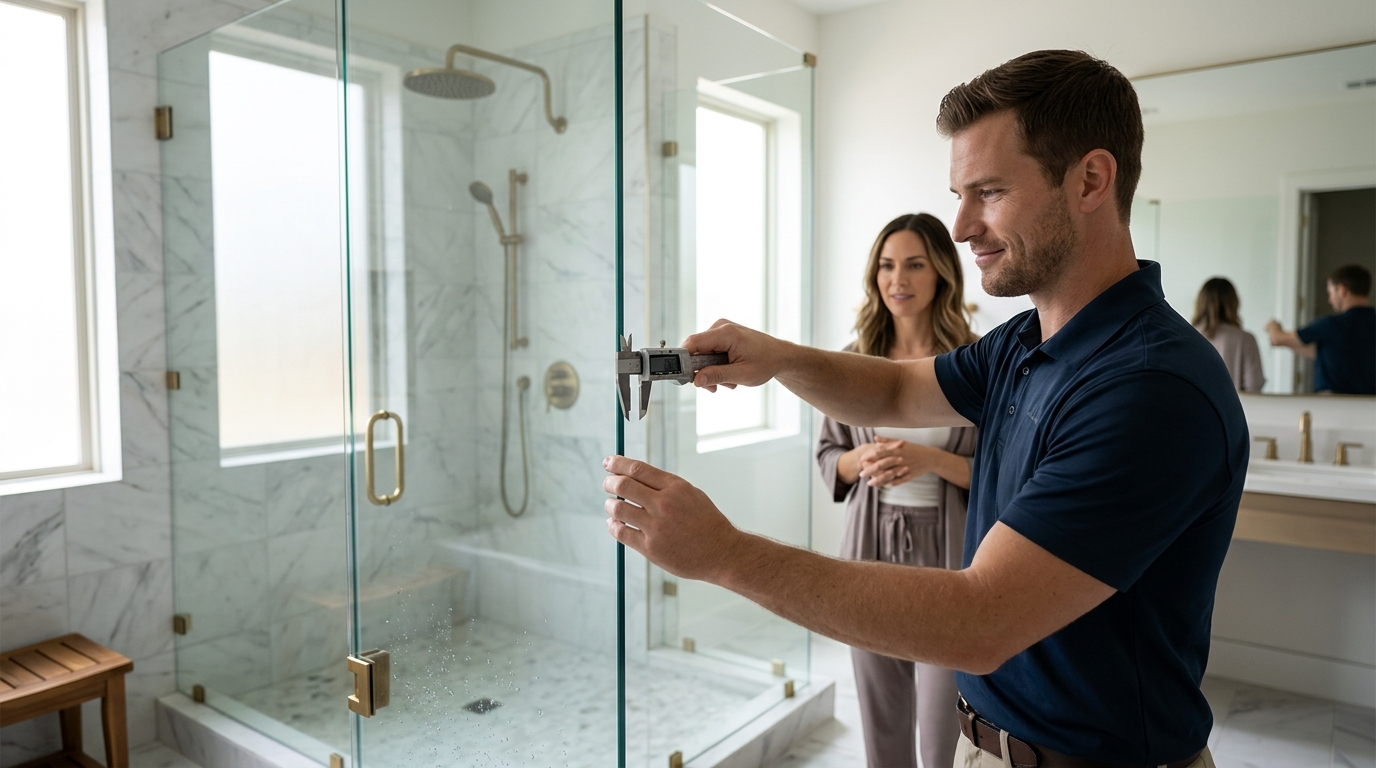
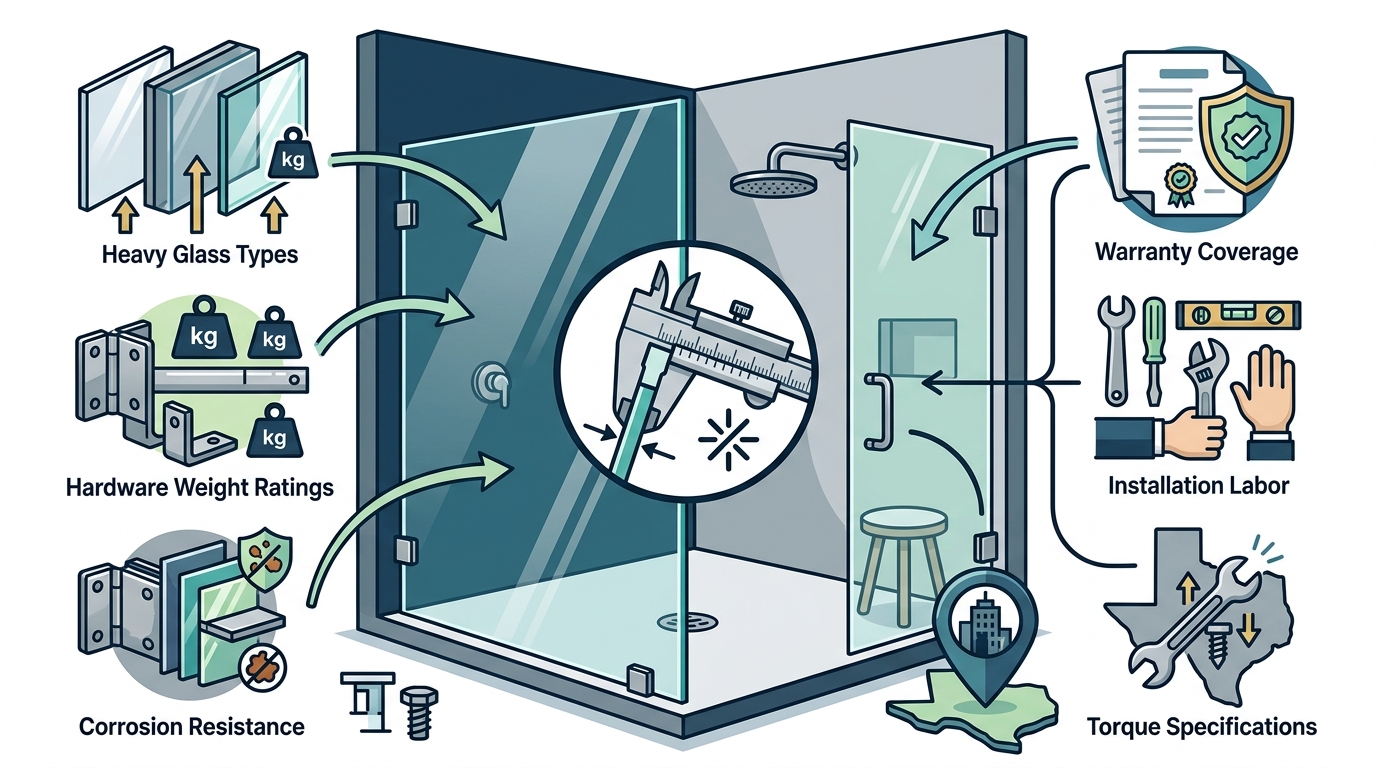
Homeowners must verify that frameless glass meets a minimum 3/8-inch thickness standard and that all hardware components are rated for the specific weight of the glass panel. This guide covers warranty coverage, thickness standards, hardware weight ratings, corrosion resistance, installation labor, and torque specifications. Frameless Glass Company provides these custom solutions in Austin, Texas, ensuring every installation meets strict safety and aesthetic standards. For additional details, review the framelessglasstx com.
Warranty Coverage
Warranty coverage is a contractual guarantee provided by the manufacturer or installer that protects the customer against defects in materials or workmanship. When evaluating a frameless glass system, homeowners should distinguish between the glass warranty and the hardware warranty. Glass is typically covered for a lifetime against breakage under normal use, while hardware components often carry a shorter warranty period, such as five to ten years. It is critical to verify if the warranty covers labor costs for repairs. Some providers only cover the cost of replacement parts, leaving the homeowner to pay for the technician's time. Frameless Glass Company ensures that their warranty terms are transparent, covering both the structural integrity of the glass and the functional performance of the hardware. Homeowners should request a written copy of the warranty before signing any contract. This document should explicitly state what is excluded, such as damage caused by improper cleaning or structural shifts in the building. For additional details, review the .
Glass Thickness Standards
Hardware Weight Ratings
Hardware weight ratings are the maximum load capacities specified by the manufacturer for hinges, clamps, and handles. Every piece of hardware has a specific weight limit, and exceeding this limit can result in mechanical failure. Homeowners must calculate the total weight of the glass panel and ensure that the selected hardware is rated to support at least 1.5 times that weight. This safety factor accounts for dynamic loads, such as the force applied when opening or closing the door. For example, a 3/8-inch glass panel measuring 36 by 72 inches weighs approximately 100 pounds. The hardware must be rated for at least 150 pounds. Using under-rated hardware is a common cause of hinge failure and door sagging. Frameless Glass Company selects hardware specifically matched to the weight of the glass, ensuring that every component operates within its safe load capacity. This attention to detail prevents premature wear and ensures smooth operation for years. For additional details, review the Customer Experience.
Corrosion Resistant Materials
Installation Labor Inclusions
Glass Thickness Specifications
Included Hardware Components
Wall Substrate Reinforcement
Hardware Torque Specifications
Key Takeaways
- Verify that the glass thickness meets the minimum 3/8-inch standard for frameless shower enclosures. For additional details, review the Frequently Asked Questions.
- Ensure that all hardware components are rated for at least 1.5 times the weight of the glass panel. For additional details, review the About.
- Choose corrosion-resistant materials such as grade 316 stainless steel or anodized aluminum for hardware.
- Review the warranty coverage to understand what is included for both glass and hardware.
- Inspect the included hardware components upon delivery to ensure completeness and quality.
- Work with a reputable provider like Frameless Glass Company to ensure all specifications are met.
Frequently Asked Questions
What is the minimum glass thickness for a frameless shower door?
The minimum glass thickness for a frameless shower door is 3/8 inch. This thickness provides sufficient rigidity to prevent flexing and stress fractures. For larger enclosures, 1/2 inch glass may be required.
How do I determine the correct hardware weight rating?
Calculate the total weight of the glass panel and select hardware rated for at least 1.5 times that weight. This safety factor accounts for dynamic loads during use.
What type of stainless steel is best for shower hardware?
Grade 316 stainless steel is the best choice for shower hardware due to its superior resistance to chlorides and corrosion. Grade 304 is also acceptable for most residential applications.
Does the warranty cover labor costs for repairs?
Is wall substrate reinforcement always necessary?
What are hardware torque specifications?
Hardware torque specifications are the precise force values required to tighten screws and bolts. Using a calibrated torque wrench ensures that the hardware is secure without causing damage to the glass or wall.